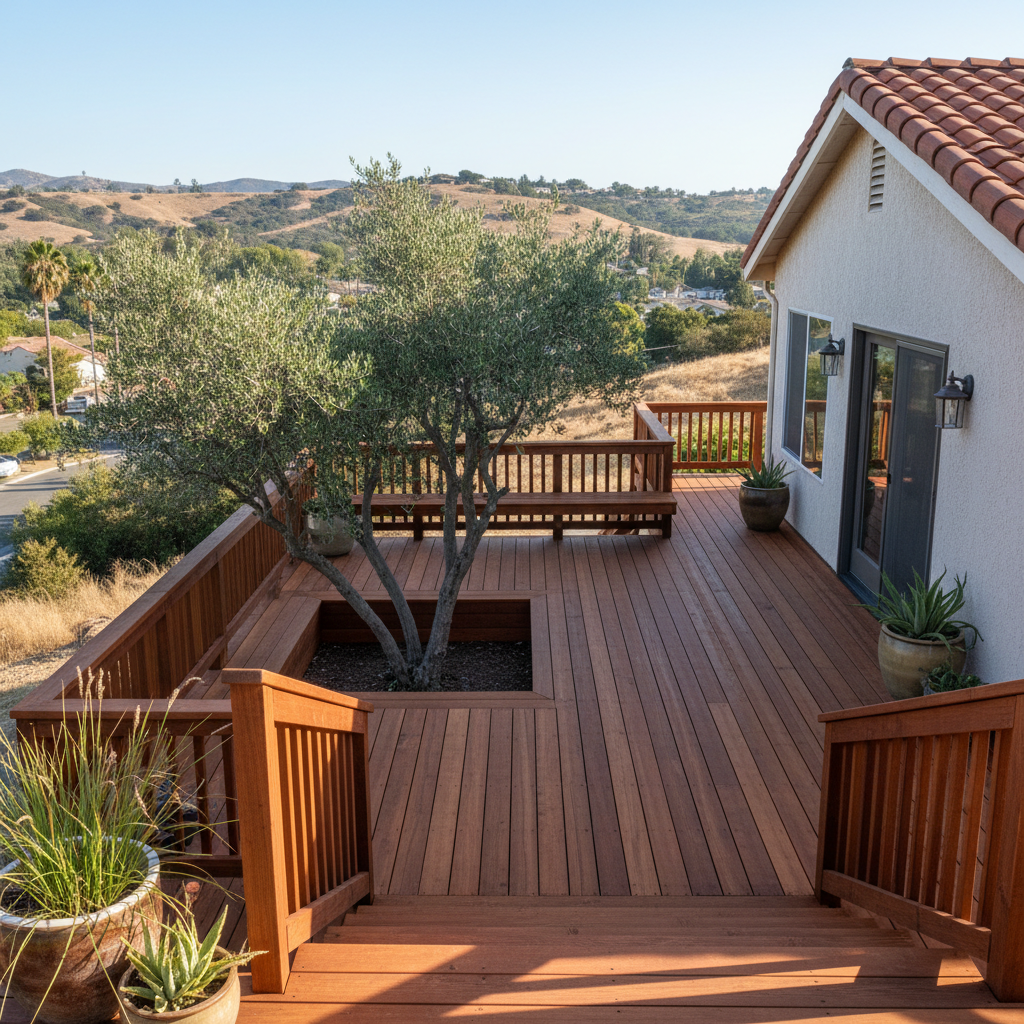
You've got a beautiful wood deck, right? It's like another room, a place for barbecues, morning coffee, or just soaking up that California sunshine. But living here in Vista, with our unique coastal-influenced climate, means your deck faces some specific challenges. It's not just about slapping on some stain; you really need to understand our weather's rhythm and how it affects wood.
Understanding Vista's Climate & Your Deck
Our weather here is pretty sweet, most of the time. We get those warm, dry summers and mild, wetter winters. But that's exactly what can be tough on wood. The constant shift from dry heat to dampness — even if it's just morning dew or fog rolling in from the coast — causes wood to expand and contract. Over time, that leads to cracks, splits, and a breakdown of protective finishes. Think about those older homes up in Shadowridge or down by the creek beds – you'll often see decks that haven't had the right care looking pretty rough because of these cycles.
Then there's the sun. Even though we don't get the extreme humidity of other regions, our UV index can be high. That relentless sun beats down, fading finishes, drying out the wood, and making it brittle. Algae and mildew can also be a problem, especially in shadier, damper spots or after a string of foggy mornings. It's a real battle sometimes.
When to Schedule Deck Work: Timing is Everything
So, when's the best time to do major deck work, like staining, sealing, or even a full restoration? I'll tell you straight: late spring through early fall is generally your sweet spot. Why?
Spring (April-May): This is prime time. The winter rains have usually tapered off, and the wood has had a chance to dry out thoroughly. Temperatures are consistently warm but not scorching hot, which is ideal for finishes to cure properly. You want to avoid applying anything if the wood is still damp or if rain is in the forecast.
Summer (June-August): Still good, but you need to be mindful of the heat. Applying stain or sealer in direct, intense midday sun can cause it to dry too quickly. This leads to uneven application, lap marks, and poor penetration. It's better to work in the morning or late afternoon when it's a bit cooler and the sun isn't directly overhead. Also, watch out for those occasional Santa Ana winds; they can dry out surfaces too fast and kick up a lot of dust.
Fall (September-October): This can also work, especially early fall. The heat of summer is receding, but we usually still have plenty of dry days. Just keep an eye on the forecast for early winter rains. You need a good 2-3 days of dry weather after application for most finishes to properly cure.
What about winter? Forget about it for major projects. The consistent dampness, cooler temperatures, and increased chance of rain make it a bad idea. Finishes won't dry or cure correctly, and you'll just be wasting your time and money. Seriously.
Year-Round Protection: Beyond the Big Project
Protecting your deck isn't a one-and-done deal. It's ongoing. Here's what I recommend:
Regular Cleaning: Don't let dirt, leaves, and debris sit on your deck. They trap moisture and can lead to mildew and rot. A simple sweep or hose-down once a week, especially in fall when leaves are dropping, goes a long way. For tougher grime, a soft brush and a mild deck cleaner (follow the instructions!) can do wonders. Just don't go crazy with a high-pressure washer; you can damage the wood fibers.
Check for Damage: Walk your deck regularly. Look for loose boards, popping nails or screws, splinters, or any signs of rot. Catching small issues early prevents them from becoming big, expensive problems. Pay special attention to areas around planters or where furniture sits, as these spots can trap moisture.
Reapply Finish as Needed: This is crucial. Most quality stains and sealers will last 2-3 years, but some might need it annually, depending on sun exposure and traffic. You can do a simple water test: pour a little water on your deck. If it beads up, your finish is still doing its job. If it soaks into the wood, it's time to reapply. Don't wait until the wood looks completely faded and gray.
Keep it Clear: Try not to leave potted plants or heavy mats in the same spot for long periods. They trap moisture underneath, which is a recipe for mildew and wood deterioration. Rotate them or lift them periodically to let the deck breathe.
Professional Inspection: Every few years, it's a good idea to have a professional look at your deck. We can spot things you might miss, like structural issues or subtle signs of rot. Genesis Deck Solutions offers these inspections, and we can give you an honest assessment of your deck's health and what it needs to keep it safe and beautiful.
Your deck is an investment. Treating it right means you'll get to enjoy it for many years to come without costly repairs down the line. A little consistent effort throughout the year, timed right with our Vista weather, makes all the difference.